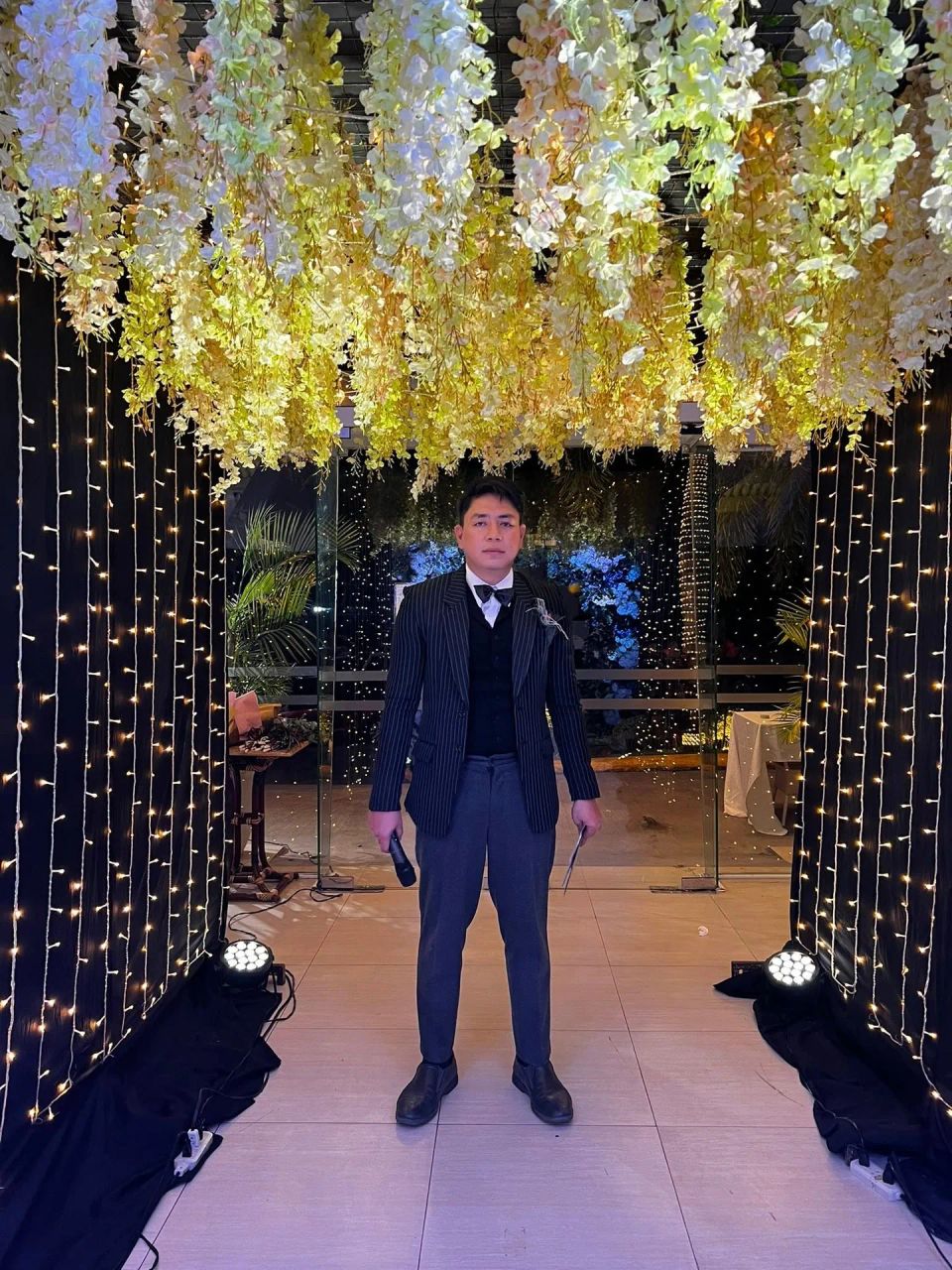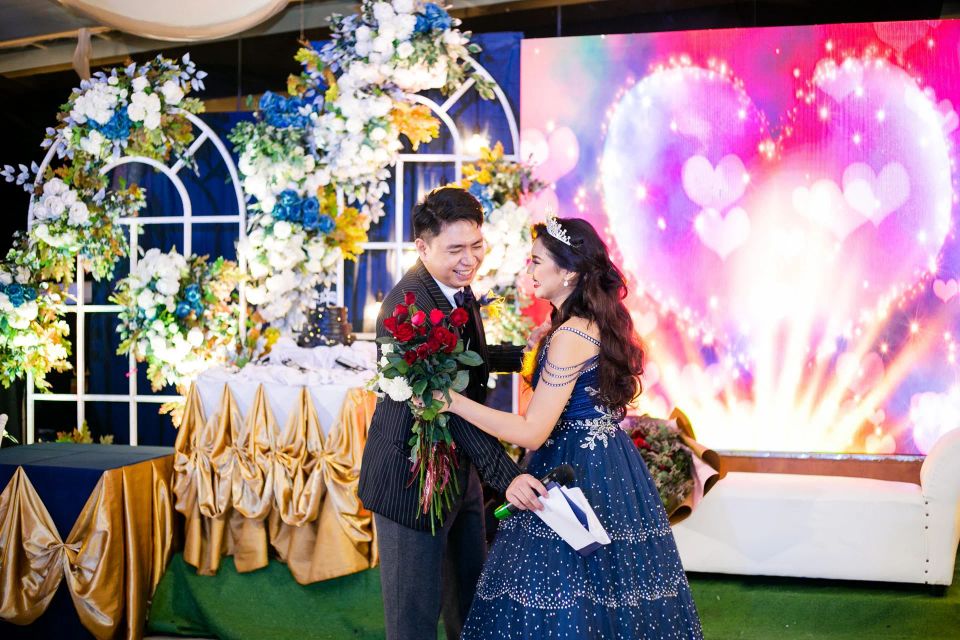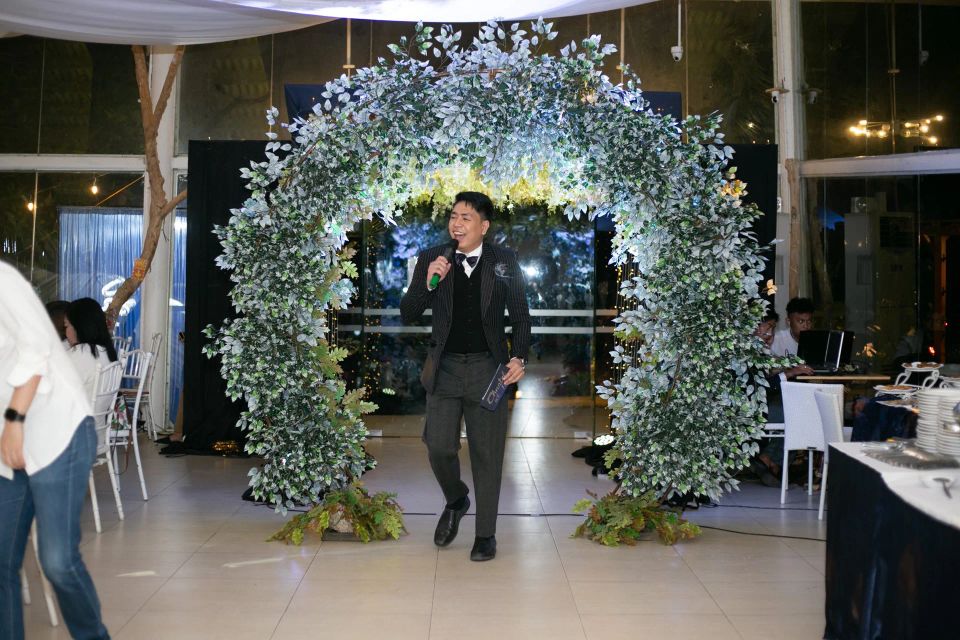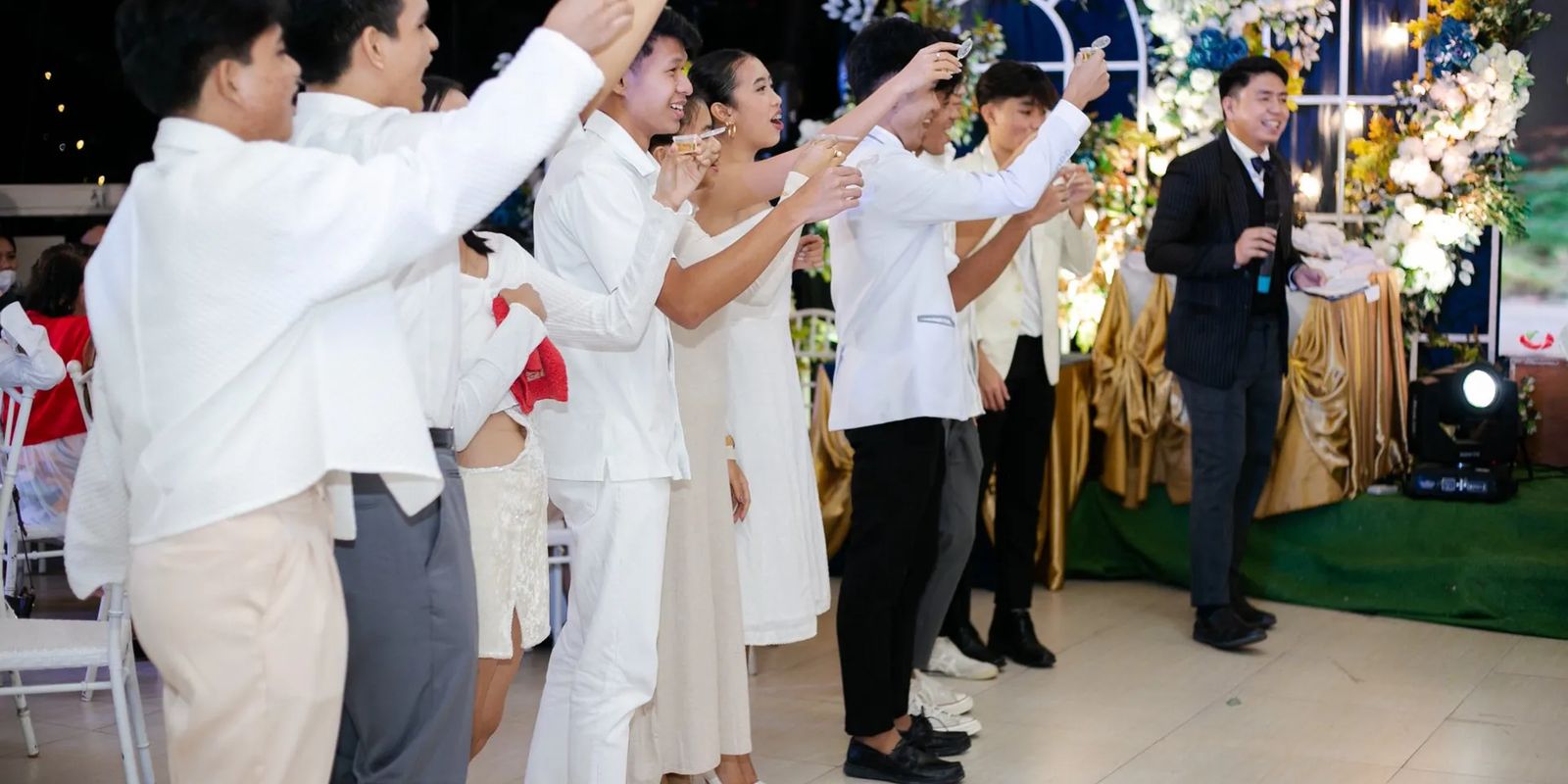
A bilingual emcee switches between English and Tagalog depending on who is on stage and who is listening: English for structure, Tagalog for warmth, Taglish for the room. At Filipino events spanning four generations, that judgment is what keeps everyone in the same program.
Walk into any Filipino wedding or debut and count the generations. A lola who is most comfortable in Tagalog or her province's language. Parents who move between Tagalog and English without noticing. A barkada that speaks in English with Tagalog punctuation. Ninongs and ninangs who expect a certain formality. One microphone has to reach all of them. That is why the most useful skill an emcee brings to a Filipino event is not volume or jokes but the ability to switch languages at the right moment.
What Does "Bilingual Emcee" Mean on a Stage?
A bilingual emcee does not translate every line twice. That doubles the program and bores everyone. Instead the emcee chooses the language each moment needs:
- English for structure. Welcomes, program flow, instructions for games, and anything that will be quoted on video.
- Tagalog for warmth. Introducing grandparents, inviting the sponsors, the moment before the father-daughter dance, and coaxing a shy participant to speak.
- Taglish for the room. The natural mix most Metro Manila guests actually speak, used for banter, transitions, and keeping energy up during dinner.
The skill is in the switching. A good emcee can introduce the father of the debutante in Tagalog, turn to the barkada with a line in English, and land the joke for both without either group feeling left out.
When Does Switching Languages Matter Most?
The grandparents. When a lola or lolo is called to the stage, a sentence in Tagalog, or in Bisaya or Ilocano if the emcee has prepared it, changes their face. It is the moment guests remember.
The 18 roses and 18 candles. The participants range from a Grade 5 cousin to an eighty-year-old ninong. Each introduction should sound like it was written for that person, which sometimes means a different language for the next one. The debut emcee script guide shows how this works line by line.
Speeches and toasts. Some speakers freeze in English and flow in Tagalog. A bilingual emcee notices in the first sentence and can gently steer: "Sige, in Tagalog is fine, we are all family here."
The games. Bouquet, garter, money dance, raffles. These run on energy, and energy in a Filipino room is mostly Taglish.
Corporate events. Formal segments in English for executives, media, and partners; games and raffles in Taglish so the employees relax. See the guide to briefing a corporate emcee for how to specify the mix.
What Should You Tell Your Emcee About Language?
Give the emcee a picture of the room before the night.
- Which languages the grandparents and older relatives are most comfortable in.
- Whether there are guests from abroad who need everything in English, such as a foreign groom's family.
- Any regional language that would land with a large part of the room.
- How formal the family wants the program to sound, since Tagalog can be warm or stiff depending on register.
- Any words, nicknames, or family phrases that should appear in the script.
A professional will ask most of this unprompted. If they do not, ask them how they handle language, and listen for an answer that involves judgment rather than a fixed rule.
Why Does a Bilingual Emcee Change the Outcome?
Guests who cannot follow the program disengage. They talk through the speeches, leave before the games, and remember the food instead of the moments. When every generation understands what is happening and feels spoken to, the room stays together from the entrance to the last dance. That is the difference between an event that was run and one that was hosted.
Planning a celebration where the family spans generations and languages? Check Rob's availability for your date. Rob hosts in Filipino and English and switches naturally through the night.
Frequently Asked Questions
Should our event program be in English or Tagalog?
For most celebrations in Metro Manila, both. English gives the program structure and reads well on video. Tagalog reaches grandparents, titas, and the sponsors. A bilingual emcee decides moment by moment, based on who is on stage and who is listening.
What if many guests speak Bisaya, Ilocano, or another language?
Tell the emcee in advance. A professional will learn the greetings and a few warm phrases for the segments that matter, such as introducing the grandparents, and will keep the rest of the program in the mix your family is comfortable with.
Does bilingual hosting cost more?
Usually not. Most experienced emcees in the Philippines host in both languages as standard. What you are paying for is judgment about when to switch, and that comes with experience rather than a surcharge.